
Reviewed · WORKSHOPS
Private Kitesurfing Lessons in Tulum with a Private Beach Access 3hrs
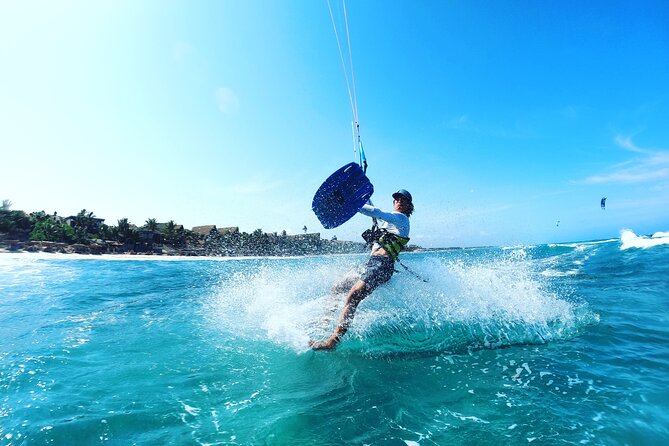
Tulum’s Papaya Playa gives this private lesson a fine setting: you learn kitesurfing right on the beach, with no crowd of strangers slowing down your progress. Siankite’s instructors build the session around your group, starting with wind awareness and kite control before moving into water starts and riding.
I like the private format and the full equipment package, especially if you are a first-timer who needs calm, direct instruction. I also like the local touch at the end, when the team can point you toward good food and relaxed places around Tulum. The main catch is the wind and surf: poor weather can cancel the session, and rough water may make early progress harder.
In This Review
- Key points to know before booking
- Starting at Papaya Playa with Siankite
- The first stage: wind, kite control, and safety
- The second stage: body dragging and water starts
- The third stage: riding, transitions, and a possible jump
- Why the private format matters
- Equipment from international brands
- The people behind the lesson
- Weather, surf, and the limits of the experience
- What the three-hour timing means for your day
- Value for beginners and experienced riders
- Who should book this Tulum lesson
- Should you book the Siankite lesson?
- FAQ
- Where does the kitesurfing lesson begin?
- How long does the activity last?
- Is the lesson private?
- Is equipment included?
- Is the lesson available in English?
- What happens if the weather is poor?
Key points to know before booking
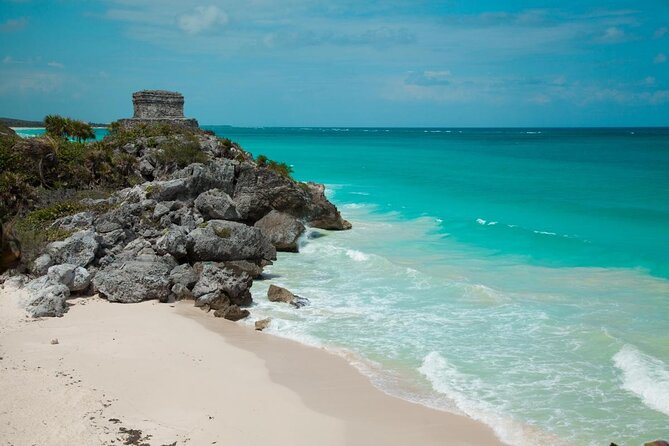
- Private beach access at Papaya Playa: Meet inside Posada Lamar, near the Papaya Playa area, and stay close to the water throughout the lesson.
- A lesson shaped around your group: You are not placed in a large class, so the instructor can adjust the pace and repeat drills when needed.
- A clear beginner progression: Expect wind theory, kite control, safety systems, water launches, body dragging, starts, transitions, and riding.
- All essential kitesurfing gear included: The package provides equipment from international brands, so you do not need to bring a full kit.
- Three hours of focused activity: The session is physical, practical, and likely to leave you ready for a quiet sunset on the beach.
- Strong local connections: Sian, Sean, and Macondo are names linked with the Siankite operation and its teaching team.
Starting at Papaya Playa with Siankite
The meeting point is listed at 5HH3+RP Tulum, with the activity beginning and ending at the same place. Siankite operates from Posada Lamar, inside the Papaya Playa setting, putting you close to the beach instead of sending you through a long transfer before the lesson begins.
The exact beach access matters. Kitesurfing equipment is bulky, and beginners benefit from spending less time carrying gear and more time listening, practicing, and getting on the water. The school is also described as being inside Playa Selva, only steps from Ahau. If you are arriving by car or taxi, make sure you have the Plus Code and the name Siankite ready.
The operation uses private beach access, which gives the lesson a more contained feel. You are not simply meeting an instructor at a public stretch of sand and hoping to find the right equipment. The beach base, gear, and teaching plan are organized around the session.
The activity is offered in English. Nearby public transportation is available, and confirmation is sent at booking. The listed operating hours are 8 a.m. to 7 p.m., every day, though the actual lesson time will depend on the booking you choose and suitable wind conditions.
A few more Tulum tours worth weighing up
- Private Kiteboarding Lesson in Tulum
★ 5.0 · 90 reviews - Tulum: Mexican Cooking Class in Local Home
★ 4.9 · 34 reviews - Basic Surf Lessons in Tulum
★ 5.0 · 21 reviews
The first stage: wind, kite control, and safety
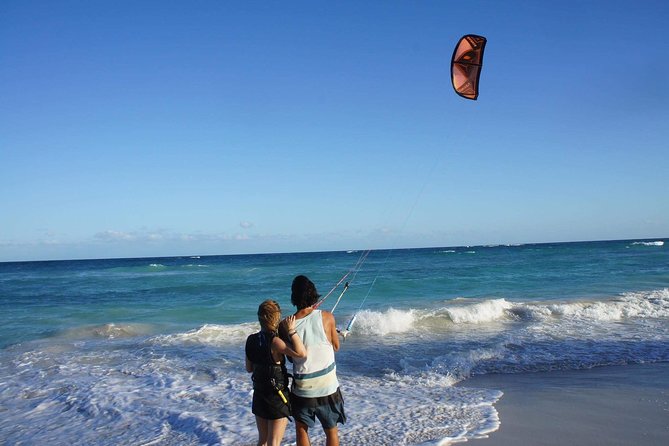
The first part of the lesson is less flashy than riding, but it is where a safe session begins. Your instructor introduces the wind window, explains how the kite moves through it, and helps you understand the difference between the neutral zone and the power zones.
This basic theory has a practical purpose. A kite responds to wind direction and angle, not simply to how hard you pull the bar. Learning where the kite has little power, where it generates more force, and how to keep it under control gives you a better chance of making steady progress once you reach the water.
You also work through a flight plan and general wind awareness. That means learning to read the conditions before attempting a water start. For a first lesson, this is useful because it replaces guesswork with a simple sequence: check the wind, position the kite, understand the power, and then act.
Safety systems are part of this stage as well. You learn how the release systems work, along with water launches and self-rescue procedures. These skills may not be the reason you booked a beach activity in Tulum, but they are some of the most valuable parts of the lesson. A private instructor can stop and repeat the explanation until you understand what to do.
The early exercises also help you get a feel for the kite without immediately asking you to stand on the board. That separation is sensible. Kite control comes first, and board handling comes later.
The second stage: body dragging and water starts
The next section moves from handling the kite to using its power in the water. You practice power drag, which teaches you how the kite pulls your body through the water before you are fully riding on the board.
This can feel strange at first. The kite may pull you in a direction that is different from the one you expect, and you need to learn how to steer while staying relaxed. The point is not speed. It is learning how to manage the kite’s pull and use the wind rather than fight it.
Controlled water starts follow. This is the moment many beginners are waiting for, but it is also where patience helps. You must coordinate the kite position, your body, the board, and the timing of the pull. With a private lesson, the instructor can focus on the exact part that is causing trouble instead of moving the whole class ahead.
You also begin working on the difference between going upwind and downwind. These are not just directional labels. They affect your speed, your control, and your ability to return to your starting point.
Repeated drills in water launches and starts are built into this stage. That repetition is good value in a private lesson. You may not master the movement on the first try, but several attempts with immediate correction can help the mechanics make sense.
The conditions at Papaya Playa will shape this part of the experience. One direct account describes a very messy beach and rough surf that made handling the board difficult. That is a useful warning for beginners: the lesson can be well organized, yet the water may still be demanding on a particular day.
The third stage: riding, transitions, and a possible jump
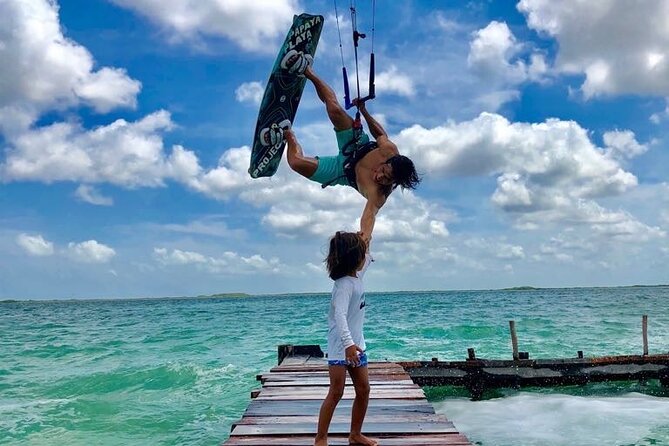
The final stage focuses mainly on riding. By this point, you have worked on the wind window, kite control, safety, body dragging, and water starts. The aim is to connect those pieces into a controlled run across the water.
Upwind mechanics receive special attention. Riding downwind can feel easy because the wind carries you along, but it can also take you away from the point where you started. Learning to work upwind helps you keep your position and makes the sport more useful for future sessions.
Transitions are also part of the plan. A transition is the change from one direction to another, and it requires coordination between the kite, board, and body. You should expect to practice the basics rather than perform polished turns immediately.
Safety procedures continue during the riding section. That is reassuring because the lesson does not treat safety as something finished during the opening briefing. You keep applying the same control and self-rescue ideas while moving on the water.
The description says you may even jump by the third session. Treat that as a possibility, not a promise. Your progress will depend on wind, surf, comfort, and how quickly you learn the earlier skills. For some beginners, simply riding under control is the real success of the day.
The package describes three sessions that can take an absolute beginner toward riding. At the same time, the listed experience duration is approximately three hours, and the schedule describes first, second, and third sessions within the teaching plan. If you are booking with the goal of completing a multi-lesson progression, confirm exactly how many three-hour lessons your reservation includes.
A different side of Tulum on the same trip:
- Chichen Itza, Cenote and Valladolid Small Group Day Trip
★ 5.0 · 2,104 reviews - Tulum Guided Tour, Magical Cenote, Lagoon Snorkeling and Beachside Lunch
★ 5.0 · 1,888 reviews - Tulum Ruins, Turtles in Akumal and Cenote tour
★ 5.0 · 1,706 reviews - Sian Ka’an Adventure Full Day Trip to Punta Allen
★ 5.0 · 1,179 reviews
Why the private format matters
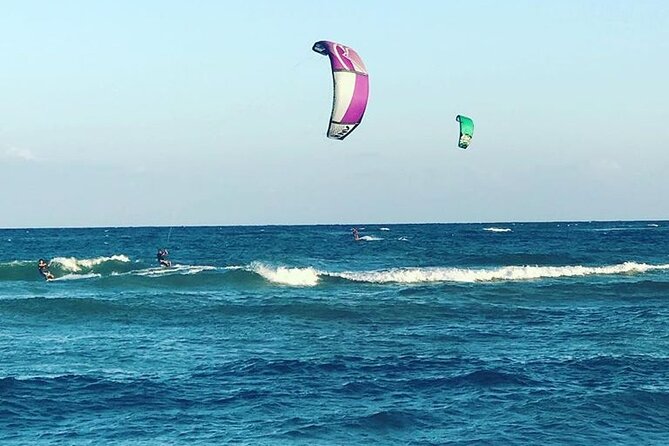
Private instruction is the clearest reason to choose this experience over a group class. You and your companions are the only participants in your activity, so the instructor can work at your pace.
That matters in kitesurfing because different skills develop at different speeds. One person may understand kite control quickly but struggle with water starts. Another may stand on the board early but need more time with safety procedures. A private instructor can spend extra time on the weak point without holding up a class.
The format is also useful for couples, friends, or a small family group with mixed confidence. You still need to confirm how the instructor manages more than one student at a time, but the private setup gives you a more personal learning environment than a standard shared lesson.
I would not choose this solely because you hope to jump by the end. I would choose it because you want concentrated instruction and a clear path from beginner theory to practical riding.
Equipment from international brands
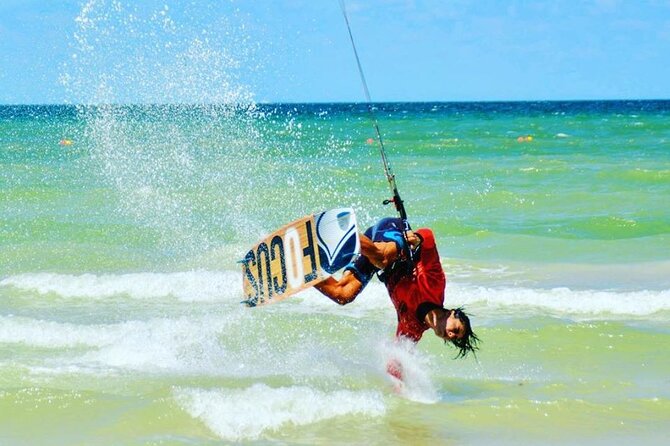
All necessary gear is included, with equipment from international brand names. That is important for a first attempt because buying or renting a complete setup would add cost and complexity.
Included equipment also lets you arrive without needing prior knowledge of kite sizes, boards, bars, lines, or safety releases. Your instructor can match the equipment to the lesson and conditions, then explain how it works before you enter the water.
The equipment does not erase the effect of the conditions. A board can still be difficult in choppy surf, and a kite cannot make poor wind suitable for learning. Still, having the right gear and an instructor who knows it removes one major barrier for beginners.
If you already kitesurf at a high level, the equipment and teaching may serve a different purpose. One experienced rider specifically praised Macondo’s preparation and equipment, and described this part of Tulum as the best spot in the area. For an advanced participant, the appeal may be local guidance and access rather than basic instruction.
The people behind the lesson
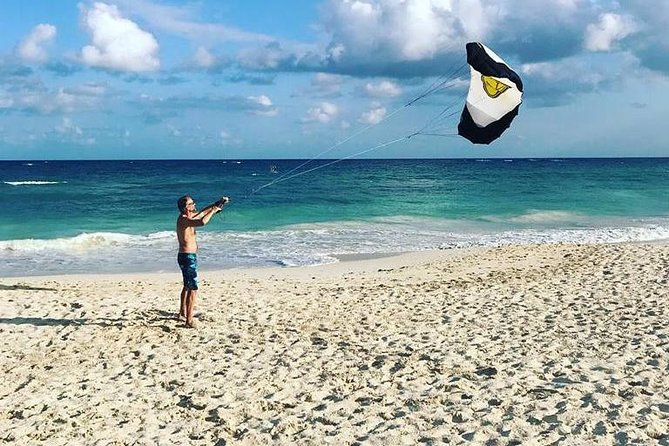
Siankite is the provider, and the operation has a small, community-focused feel. Sian is closely associated with the school, while Sean is also named in connection with the instruction. Macondo is praised for preparation and equipment.
You should not book expecting a particular instructor unless the reservation confirms that person. Still, knowing these names helps you identify the local operation when you arrive and gives you useful points of contact if you need to clarify meeting details.
The team also offers tips on local food and hangouts around Tulum after the lesson. That small extra is worthwhile. A good instructor can tell you where to go for a simple meal or relaxed evening, and those suggestions may fit your location better than a generic online list.
The social side may appeal to you if you like a friendly beach school rather than a strictly transactional class. It may matter less if you want a silent, highly formal coaching session. The available information points to a welcoming community, but the main product remains the three-hour private lesson.
Weather, surf, and the limits of the experience
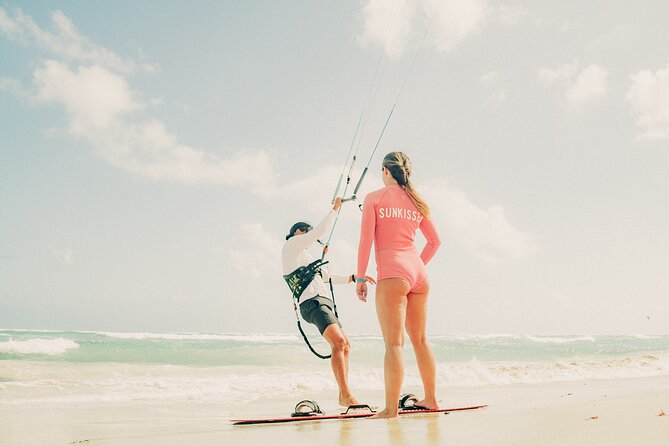
Kitesurfing depends on good weather, and this activity can be canceled if conditions are not suitable. If that happens, you are offered another date or a full refund.
Wind is not the only factor. Surf and beach conditions can make board handling harder, particularly for someone who has never controlled a kite and board at the same time. You may find that the best possible lesson on a rough day produces less riding than expected.
That is not necessarily a flaw in the instruction. It is simply part of the sport. A responsible school should put control and safety ahead of forcing a beginner into difficult water.
The experience is listed as suitable for most people, but it is active and physically demanding. Expect to spend the session standing, handling gear, controlling a kite, and working in the water. If your main goal is a passive beach morning, this is the wrong choice. If you want exercise and a skill you can build on, the physical effort is part of the value.
What the three-hour timing means for your day
Three hours is long enough for a real lesson, but short enough to fit around other Tulum plans. You can schedule it as the main activity of your day and still have time for a beach sunset or an evening meal.
The session is not just three hours of riding. Some of the time goes to wind theory, equipment handling, safety systems, launching, and instructor corrections. That is a good use of time for a beginner, even if you spend less time standing on the board than you imagined.
The listed hours run from 8 a.m. to 7 p.m. daily. Since wind conditions affect the sport, the best time for your booking should be confirmed with Siankite rather than guessed from the opening hours alone.
The activity returns to the meeting point. That makes planning easier because you do not need to arrange a separate end location. Bring enough time afterward to change, rest, and enjoy the beach without rushing straight to your next reservation.
Value for beginners and experienced riders
The value here comes from the combination of private coaching, beach access, and included equipment. You are paying for direct attention and a structured progression, not just time on the beach with a kite.
For a complete beginner, that can be a better use of money than trying to teach yourself from a rented kite. The safety briefing, controlled starts, and guided water practice give you a foundation that casual experimentation cannot provide.
For an experienced rider, value depends on what you need. If you already own equipment and know the basics, the private coaching may be unnecessary. But local instruction, a known beach base, and prepared equipment can still be useful, especially if you want help with conditions at this Tulum spot.
No tour price is provided here, so I cannot judge whether it is a bargain in pesos. Compare the total cost with the length of instruction, private group access, equipment rental, and the time saved by meeting directly at the beach. Those are the parts that make the package worth considering.
Who should book this Tulum lesson
I would recommend this experience to:
- First-time kitesurfers who want private attention
- Friends who want to learn together without joining a large class
- Couples looking for an active beach activity
- Stronger riders who want local guidance at Papaya Playa
- Visitors who like adding local food and nightlife tips to a sports lesson
I would be more cautious if your schedule is tight and you cannot handle a weather change. The activity depends on suitable conditions, and rough surf can limit how much riding a beginner achieves.
You should also check the number of lessons included if your goal is the complete three-stage progression. The description refers to first, second, and third sessions while also presenting the experience as approximately three hours, so this is worth clearing up before payment.
Cancellation is flexible if you act early. You receive a full refund when canceling at least 24 hours before the start time. Cancellations or changes within 24 hours are not accepted for a refund.
Should you book the Siankite lesson?
Book it if you want a focused introduction to kitesurfing with private instruction at Papaya Playa and equipment already arranged. The strongest points are the direct coaching, the clear beginner sequence, the beach location, and the chance to finish the day with local tips and a sunset.
Go in with a sensible goal. Riding under control is a success. Jumping may happen, but it depends on your ability and the day’s wind and surf.
If you are ready for a physical lesson and can keep your plans flexible for weather, this is a strong Tulum choice. If you need guaranteed water conditions or a relaxed beach activity, choose something less dependent on wind.
FAQ
Where does the kitesurfing lesson begin?
The meeting point is 5HH3+RP Tulum, Quintana Roo, Mexico. Siankite is located inside Posada Lamar, in the Papaya Playa area.
How long does the activity last?
The activity lasts approximately three hours. The teaching plan is described in three stages covering kite control, water starts, and riding.
Is the lesson private?
Yes. Only your group participates in the activity, with a private instructor guiding the session.
Is equipment included?
Yes. The lesson includes all necessary kitesurfing gear, including equipment from international brand names.
Is the lesson available in English?
Yes. The experience is offered in English.
What happens if the weather is poor?
The experience may be canceled because of unsuitable weather. You can then choose another date or receive a full refund. You can also cancel at least 24 hours before the start time for a full refund.
Just added around Tulum
- Tulum: Sport Fishing Experience with Ceviche★ 4.0 · 3 reviews
- Horse Ride to Cenote Mil Columnas★ 5.0 · 3 reviews
- Tulum Taco Tour★ 5.0 · 3 reviews
- Tulum Area Experiences Guided ATV Tour to 3 Cenote’s, Snorkel/Swim & Local Lunch★ 5.0 · 3 reviews
- One Way Private Transfer Tulum Zone – Cancun Int Airport★ 3.5 · 3 reviews
- Exclusive 3-in-1 Tour to Tulum, Cenote and Maya Village★ 5.0 · 3 reviews
- Ultimate Surf Lesson in Tulum 1hr★ 5.0 · 3 reviews
- Private transfer from Tulum Airport to Tulum★ 5.0 · 3 reviews
Workshops, compared.

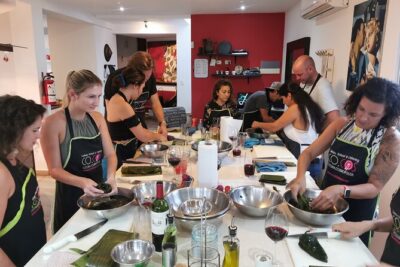
Mexican Cooking Class 1 or 3 Courses Tequila and Mezcal Tasting
Read our review →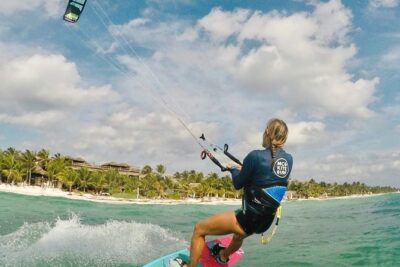

Authentic Mexican Cooking Class in Playa del Carmen
Read our review →
Gourmet Experience: 5 Course Dinner, Cocktail Class and Wine Pairing
Read our review →
3-Hour Drinks and Appetizers Class in Playa del Carmen
Read our review →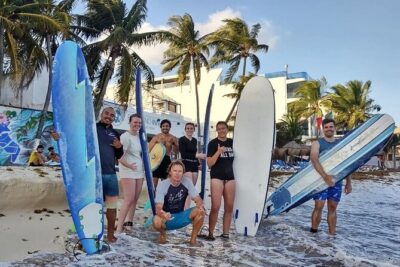
Surfing Lessons – Learn To Surf In Playa del Carmen
Read our review →Browse the lists this tour appears in