
Reviewed · WORKSHOPS
Private Kiteboarding Lesson in Tulum
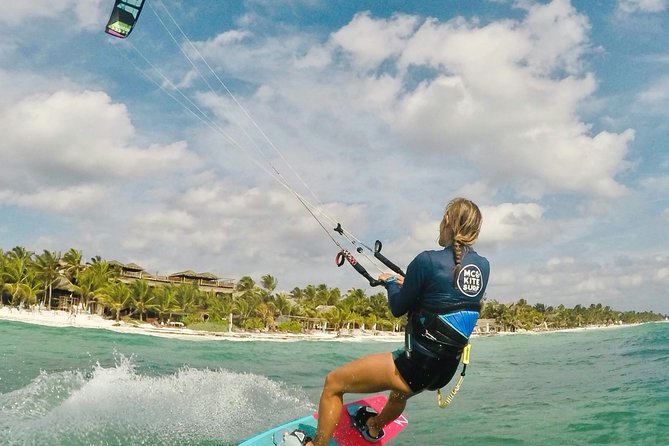
The most useful part of this Tulum lesson is that it treats kiteboarding as more than a quick thrill. You learn how the wind window and safety systems work before handling the kite, then move into the water for body dragging, power strokes, and waterstarts. That order matters when a sport involves wind, lines, and plenty of moving parts.
I like the private format, since the instructor can focus on your pace rather than splitting attention among a large class. I also like that the lesson includes self-rescue, equipment setup, and safety-bar basics, not just the exciting part of getting pulled across the water. The main consideration is weather: no wind means no lesson, and the activity is not a casual beach outing. You need moderate fitness and comfort with physical work in the water.
In This Review
- Key points about the Tulum kiteboarding lesson
- Starting at Ahau Tulum on the Caribbean shore
- Learning the wind window before touching the water
- Body dragging and power strokes in the water
- Getting on the board with assisted waterstarts
- What the instructors bring to the session
- What the $270 price includes
- Conditions, fitness, and who should book
- How to prepare for a better three hours
- Should you book this Tulum kiteboarding lesson?
- FAQ
- Where does the kiteboarding lesson begin?
- Where does the activity end?
- How long does the lesson last?
- Is the lesson private?
- Is equipment included?
- What happens if the weather is poor?
- What is the cancellation policy?
Key points about the Tulum kiteboarding lesson
- Private instruction for your group: You receive direct coaching instead of joining a large shared class.
- IKO-certified teaching: The lesson follows a structured progression from wind theory and safety to riding.
- Full kiteboarding gear included: You do not need to arrange the kite, lines, bar, or board separately.
- Safety comes before speed: Self-rescue, the safety systems, and kite control are part of the beach session.
- Several water skills are covered: Expect body dragging upwind, power strokes, waterstarts, and riding practice.
- Weather can change the plan: Poor conditions may lead to a new date or a full refund.
Starting at Ahau Tulum on the Caribbean shore
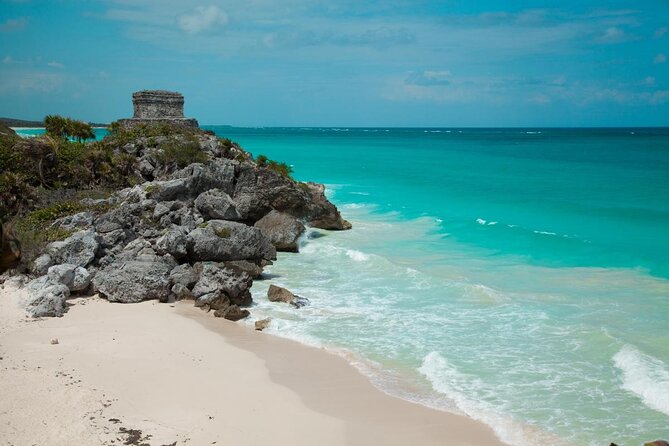
Your lesson begins at Ahau Tulum, at Carr. Tulum a Boca Paila Km. 7.5 in the Tulum Beach area. This is also where the activity ends, so you are not managing several meeting points or arranging a return transfer after a tiring session.
The experience lasts about three hours. That is enough time for a real introduction, though it is not a full certification course or a promise that every beginner will ride confidently by the end. Kiteboarding has a learning curve. Your progress depends on wind, physical comfort, how quickly you understand the kite, and how much experience you already have with board sports.
Transportation is not included, so you need to reach Ahau Tulum on your own. Food and drinks are also excluded. The practical upside is that the provider includes bathrooms, showers, and Wi-Fi, useful before and after a lesson in the hot Tulum sun.
Because this is a private activity, only your group participates. That is especially useful if one person is new and another already has experience. An instructor can help the beginner with the basics while giving the more experienced person room to work on technique. A previous lesson also included a student who wanted to practice tricks, strapless riding, and winging, while a partner was a complete novice. That suggests the teaching can adjust to mixed ability levels, although you should confirm your exact goals when booking.
A few more Tulum tours worth weighing up
- Tulum: Mexican Cooking Class in Local Home
★ 4.9 · 34 reviews - Basic Surf Lessons in Tulum
★ 5.0 · 21 reviews - Mexican Cooking class experience in Tulum
★ 5.0 · 12 reviews
Learning the wind window before touching the water
The beach session begins with kite and wind theory. You learn the basic wind window, the area where the kite can move and generate power. This may sound like classroom material, but it is the foundation of every later step. If you understand where the kite is safe, where it gains power, and how its position affects you, the water work becomes less confusing.
Next comes equipment setup. You learn how to lay out the kite and connect the lines, rather than treating the gear as a mystery assembled by someone else. That knowledge matters because line placement and setup are tied directly to control and safety.
The instructor then explains the bar and its safety systems. You will handle the control bar and learn how the safety features work. This is one of the strongest parts of the lesson for a first-timer. Kiteboarding looks simple from a distance, but the bar is your main link to the kite, and you need to know how to reduce power when conditions or your position change.
Self-rescue is also included on the beach. This is not the flashy part of the sport, but it is exactly the kind of skill you want introduced early. The lesson aims to give you a plan for dealing with trouble in the water, rather than relying only on the instructor to solve every problem.
After theory and safety, you begin kite control. The instructor can watch how you respond to the kite and correct mistakes before adding the board. This progression is sensible. Beginners who rush straight to standing often spend more time fighting the kite than learning to ride.
Body dragging and power strokes in the water
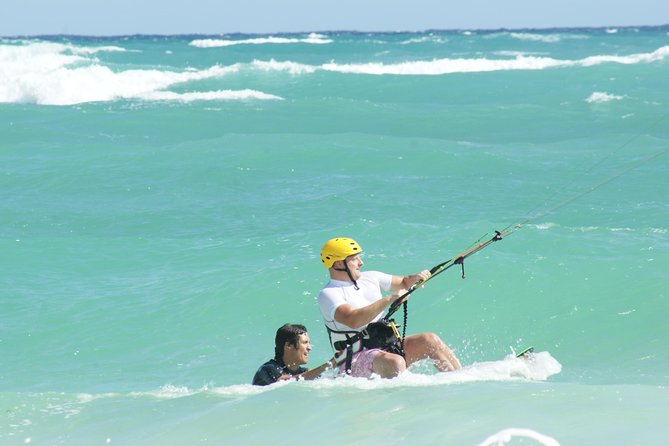
The first water skills are body dragging upwind and power strokes. Body dragging means using the kite to move through the water without standing on the board. Here, the focus is on moving upwind, which is a vital skill if you lose the board or need to return toward a starting point.
For a beginner, body dragging can feel less natural than it sounds. You are using the kite to pull you while trying to keep your body positioned correctly and maintain awareness of the wind. The instructor can guide you through how much power to use and how to work with the kite instead of pulling against it.
Power strokes teach you how the kite generates movement. You learn to move the kite through the wind window to create controlled bursts of power. This is the link between basic kite handling and getting enough pull to stand on the board.
These stages also show why the three-hour format should be viewed as an introduction, not a guaranteed complete course. Time spent understanding the wind and safety systems is time well spent, but it leaves less time for polished riding. If conditions are good and you learn quickly, you may reach the board work. If the wind is inconsistent or the first stages take longer, the instructor may need to keep the session focused on control.
Getting on the board with assisted waterstarts
The board section begins with an assisted waterstart. A waterstart is the moment when kite power helps you rise from the water onto the board. Starting with assistance lets you concentrate on body position, board placement, and kite movement without trying to solve every problem at once.
You then work toward a solo waterstart. This is a key milestone for beginners, but it can take practice. The instructor may need to correct how you place your feet, how you hold the bar, or how quickly you move the kite. The private format is valuable here because small timing errors are easier to spot and fix when the instructor is focused on one student or one group.
The lesson then lists riding downwind and upwind. Downwind riding is usually the more direct first direction, while riding upwind requires better control and board edging. Upwind progress is important because it helps you avoid drifting far from your starting point.
Transitions are the final listed board skill. A transition means changing direction, and it requires coordination between the kite, board, and your body. Reaching this stage in one session may depend heavily on your prior experience and the day’s wind. It is best to treat transitions as an available goal rather than a guaranteed result.
A different side of Tulum on the same trip:
- Chichen Itza, Cenote and Valladolid Small Group Day Trip
★ 5.0 · 2,104 reviews - Tulum Guided Tour, Magical Cenote, Lagoon Snorkeling and Beachside Lunch
★ 5.0 · 1,888 reviews - Tulum Ruins, Turtles in Akumal and Cenote tour
★ 5.0 · 1,706 reviews - Sian Ka’an Adventure Full Day Trip to Punta Allen
★ 5.0 · 1,179 reviews
What the instructors bring to the session
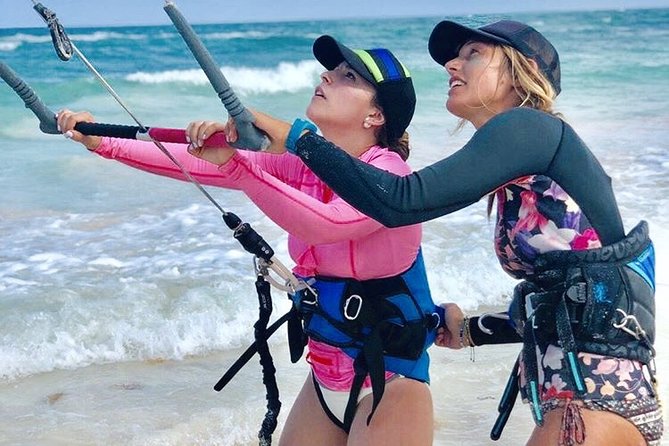
The lesson is taught by an IKO-certified instructor. That certification gives you a clear standard for the teaching format, especially around safety, kite control, and progression. You are not simply handed equipment and sent toward the water.
Mauricio and Roma are names associated with the instruction team. One detailed account described Mauricio as adaptable when working with a student interested in tricks, strapless riding, and winging, while also helping a complete beginner in the same pair. The important takeaway is not that you will receive a particular instructor, since assignments can vary, but that you should explain your ability and goals before the session begins.
Good instruction matters even more when the wind is not cooperating. The same account described the instructor as professional when the schedule had to change because the wind was not working. That is a useful sign for anyone booking a weather-dependent sport. A responsible instructor should not force a lesson simply to preserve the timetable.
What the $270 price includes
The listed price is $270 per person for roughly three hours. That is a serious spend, so the value depends on what you want from the lesson. You are paying for a private session, an IKO-certified instructor, kiteboarding gear, and access to beach facilities including bathrooms, showers, and Wi-Fi.
You also receive use of paddleboarding boards. That is a pleasant extra, but it should not be mistaken for a separate paddleboarding tour. The main product is kiteboarding instruction, and the value comes from direct coaching and equipment access.
For a first lesson, the price makes more sense if you compare it with the cost and trouble of arranging gear, learning safety systems alone, and trying to read Tulum’s wind without help. Private teaching can also save time. You spend less of the session waiting for an instructor to reach another student.
The price is harder to justify if you only want a short beach activity or are unsure about physical water sports. This is a focused lesson, not a sightseeing trip. You will be working with a kite, lines, bar, and board, and the session may feel demanding. If you are already an experienced kiteboarder, the private format may offer better value because you can request technique work, strapless practice, or other specific goals.
Conditions, fitness, and who should book
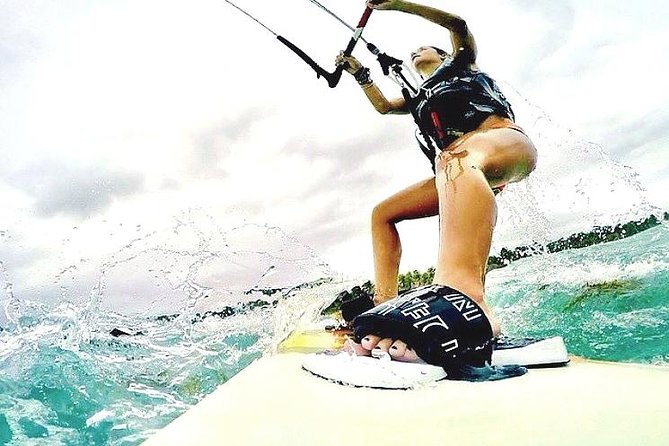
The activity is suitable for all skill levels, including beginners, but all skill levels does not mean all fitness levels. You should have moderate physical fitness and be ready for active work in the water. The experience is not recommended if you have back problems or serious medical conditions.
The minimum age is 10. A parent or guardian should consider the child’s swimming comfort, attention span, and ability to follow safety instructions, although the supplied information does not specify a separate child program.
The lesson is offered in English. Service animals are allowed. You should also plan around the weather. Kiteboarding depends on favorable wind and water conditions, so a cancellation caused by poor weather is not a failure of the experience. You will be offered another date or a full refund.
You can cancel for a full refund up to 24 hours before the local start time. Cancellations or changes made inside that 24-hour window are not refunded or accepted. Since weather can shift your plans, avoid scheduling this on the final morning of a tightly packed trip if missing the lesson would cause a major problem.
How to prepare for a better three hours
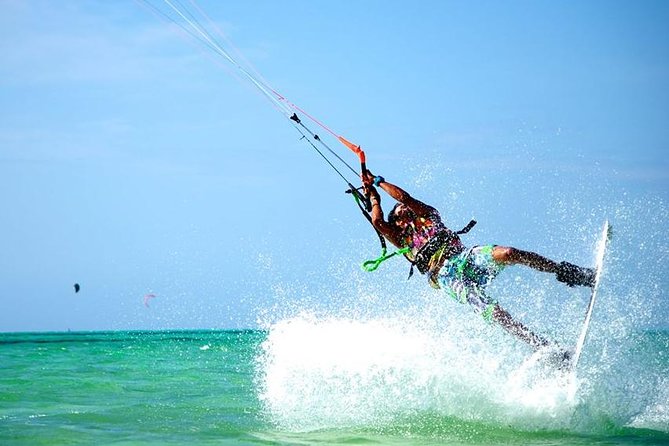
Arrive ready to listen before you try to ride. The theory, setup, and safety work may feel slower than the action, but it gives you the tools to control the kite instead of simply reacting to it.
Tell the instructor if you are a complete beginner, have board-sport experience, or want to work on a specific skill. Private instruction is most valuable when the teacher knows what you are trying to accomplish. If two people in your group have different abilities, say so at the start.
Bring whatever personal beach items you normally need, since food and drinks are not included. The provider supplies the kiteboarding equipment and access to showers and bathrooms, but the supplied information does not list a personal equipment checklist.
Keep your schedule flexible around the wind. If the conditions are poor, the best outcome may be a changed date or refund rather than a rushed lesson. The prior adjustment to a schedule when the wind failed to cooperate is a good reminder that conditions matter more than forcing a start time.
Should you book this Tulum kiteboarding lesson?
Book it if you want a proper first step into kiteboarding, not just a quick ride behind a kite. The structured sequence covers wind theory, equipment, safety, self-rescue, kite control, body dragging, power strokes, and board skills. Private coaching is a strong fit for beginners, mixed-ability pairs, and experienced riders who want targeted help.
Think twice if you want a relaxed beach morning, need guaranteed timing, or have back problems or another serious medical condition. The $270 cost is reasonable for private instruction with gear and facilities, but it is not a bargain activity for someone who may not enjoy physical water work.
For the best chance of value, book when you can spare the time for weather changes, explain your goals to the instructor, and judge success by what you learn rather than by how far you ride. If the wind cooperates, this lesson gives you a careful, safety-first introduction to a sport that is far more technical than its graceful beach image suggests.
FAQ
Where does the kiteboarding lesson begin?
The lesson begins at Ahau Tulum, Carr. Tulum a Boca Paila Km. 7.5, Zona Costera, Tulum Beach, 77760 Tulum, Quintana Roo, Mexico.
Where does the activity end?
The activity ends back at the meeting point at Ahau Tulum.
How long does the lesson last?
The lesson lasts approximately three hours.
Is the lesson private?
Yes. Only your group participates in the activity.
Is equipment included?
Yes. Kiteboarding gear is included, along with use of paddleboarding boards, bathrooms, showers, and Wi-Fi.
What happens if the weather is poor?
If poor weather causes a cancellation, you will be offered an alternative date or a full refund.
What is the cancellation policy?
You can cancel at least 24 hours before the local start time for a full refund. Cancellations or changes made less than 24 hours before the start time are not refunded or accepted.
Just added around Tulum
- Tulum: Sport Fishing Experience with Ceviche★ 4.0 · 3 reviews
- Tulum Taco Tour★ 5.0 · 3 reviews
- Horse Ride to Cenote Mil Columnas★ 5.0 · 3 reviews
- Tulum Area Experiences Guided ATV Tour to 3 Cenote’s, Snorkel/Swim & Local Lunch★ 5.0 · 3 reviews
- One Way Private Transfer Tulum Zone – Cancun Int Airport★ 3.5 · 3 reviews
- Ultimate Surf Lesson in Tulum 1hr★ 5.0 · 3 reviews
- Exclusive 3-in-1 Tour to Tulum, Cenote and Maya Village★ 5.0 · 3 reviews
- Private transfer from Tulum Airport to Tulum★ 5.0 · 3 reviews
Workshops, compared.

Mexican Cooking Class 1 or 3 Courses Tequila and Mezcal Tasting
Read our review →
Authentic Mexican Cooking Class in Playa del Carmen
Read our review →
Gourmet Experience: 5 Course Dinner, Cocktail Class and Wine Pairing
Read our review →
3-Hour Drinks and Appetizers Class in Playa del Carmen
Read our review →
Surfing Lessons – Learn To Surf In Playa del Carmen
Read our review →
DRINKING SCHOOL: Mexican Cocktail & Appetizer Class
Read our review →Browse the lists this tour appears in